
India's GST Council has approved changes allowing small online sellers to register in states without physical premises by using an e-commerce operator's warehouse as their principal place of business, aiming to boost national sales for small businesses.

Jio Platforms (JPL) is preparing a capex-light strategy to commercially launch 6G services in the early 2030s through software upgrades, rather than fresh infrastructure investments, according to Akash Ambani, managing director of JPL.
The National Payments Corporation of India (NPCI) has deferred the implementation of a 0.4 per cent Merchant Discount Rate (MDR) on Person-to-Merchant UPI transactions above Rs 2,000. Originally set for October 15, the new date will be announced after Diwali, providing relief to users and merchants, especially during the festive season. The decision came amidst opposition concerns about the levy burdening consumers.

Jio Platforms, the digital arm of Reliance Industries Ltd (RIL), is launching its initial public offering (IPO) with a price band of 1,065-1,119 a share, aiming to make RIL a net-debt-free company and create long-term shareholder value.

Online video games are emerging that recreate scenes from the Jantar Mantar protests in Delhi. Games like 'Jantar Mantar Chalo', 'Bhaag Neha Bhaag', and 'Jantar Mantar to Jail' allow players to experience elements of the demonstrations, from gathering crowds and dodging police to collecting 'Accountability' and 'Democracy' coins. Creators, inspired by news and real-life events, developed these games rapidly using AI and coding, gaining significant traction online.

The Delhi High Court has ruled that a private company's provision of email services does not, by itself, make it amenable to writ jurisdiction, even if the account is crucial for a user's business. This decision came as the court dismissed a petition by a media company seeking restoration of access to its Gmail account.

Digital services major Jio Platforms is anticipated to list on the stock exchange by the end of October, with an estimated enterprise valuation of USD 143-146 billion, making it India's largest public offer at around USD 3.8 billion.

The Supreme Court has directed the Centre to explore a statutory framework to ensure social media intermediaries comply with Indian laws regarding minors, particularly concerning their inability to independently enter into contracts. The court highlighted the need for safeguards to protect children from potential harms on digital platforms, including exploitation and misuse of data, and asked the Solicitor General to examine incorporating these requirements into intermediary rules.

'We see a lot of cases of bank deposits getting lost, especially when people die, so this will help address that because you have one consolidated view.'
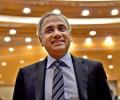
Infosys CEO Salil Parekh stated on Tuesday that the company's AI services, currently contributing over 8% of revenue, are growing rapidly and could account for almost half of its work within two to three years. He highlighted the strong demand for AI services, the company's hiring and training efforts for graduates in AI, and discussed potential risks like infrastructure challenges and societal backlash.

Digital money is gradually starting to behave like software. It's no longer inert -- sitting passively in accounts. In the not-so-distant future, your money could become 'smart' and 'active,' understanding your preferences, paying your bills automatically, optimising your returns, and managing your risks -- all without you having to manage the details.

The Kerala Legislative Assembly has passed a motion urging the central government to completely withdraw the proposed Merchant Discount Rate (MDR) on UPI transactions exceeding Rs 2,000. Chief Minister V D Satheesan and CPI MLA K Rajan highlighted concerns that the MDR would increase business costs, harm small businesses, and reduce the appeal of digital payments, while the BJP argued it would not affect general public or small merchants.
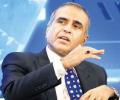
'The Rs 35,000 crore of capex every year, I don't get to sign 35 paise out of this.'

The challenge for India lies in navigating complex landscape to its best advantage. The BRICS Summit will test its navigation skills, asserts former foreign secretary Shyam Saran.
Tata Consultancy Services (TCS) has inaugurated India's first Industrial Autonomy & Engineering Lab in Pune, a "lights-out factory lab" designed to advance AI-led manufacturing. The facility features a robotic battery pack assembly line, enabling manufacturers to prototype and scale AI-first production systems with minimal human intervention, simulating self-optimising factories.

India's retail inflation surged to 5.54 per cent in September, primarily due to a significant increase in onion and other food prices, remaining just within the Reserve Bank of India's tolerance band. This marks the highest inflation since the new series with base year 2024 took effect in January.
UPI transactions saw a 27% volume increase and 20% value increase in the first half of the current fiscal year. Despite a slight moderation in September, the digital payment system is set to implement a 0.4% merchant discount rate on transactions over Rs 2,000, aiming for a sustainable revenue model. Small merchants and person-to-person payments remain exempt, and UPI's global presence continues to expand.
Microsoft has inaugurated its India South Central datacenter region in Telangana, marking its fourth cloud region in the country. This expansion aims to bolster India's cloud and AI infrastructure, with Telangana targeting 5 GW of datacenter capacity by 2029 and attracting significant investment in the digital ecosystem.

Union Minister Mansukh Mandaviya inaugurated the BRICS Traditional and Indigenous Sports Demonstration Games 2026 in Ahmedabad, emphasising the role of traditional sports in reflecting cultural identity and fostering international cooperation. The one-day event, hosted by the Ministry of Youth Affairs and Sports, brought together delegations from BRICS and partner countries to showcase indigenous sporting practices like Mallakhamb, Yogasana, and Kalaripayattu from India, alongside Wushu from China and Sambo from Russia. Gujarat Deputy Chief Minister Harsh Sanghavi also highlighted India's rich sporting heritage and proposed initiatives for global promotion and preservation of traditional sports.

India's proposal to link BRICS payment systems, including central-bank digital currencies (CBDCs), was notably absent from the grouping's New Delhi Declaration, despite being a key agenda item for India's chairmanship. This omission leaves the 16-year effort for trade in local currencies without a settled payment architecture, with the declaration only 'acknowledging' the work of the BRICS Payment Task Force.
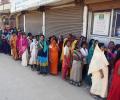
Meghalaya has shown significant progress in digital transactions and financial inclusion, recording 32.76 crore digital transactions and nearly 10 lakh Jan Dhan accounts by 2025-26. Efforts like the JAM Trinity and financial literacy programmes have expanded banking access, with a high percentage of bank account holders adopting digital modes. The next phase focuses on enhancing financial literacy and cyber resilience, especially in rural areas.

The Indian Super League 2026-27 season is set to begin with renewed optimism after a turbulent previous season.

The United Arab Emirates (UAE) has expressed intent to invest an additional $25 billion in India, with an ultimate goal of reaching $100 billion in investments, Union Minister Piyush Goyal announced. This comes as both nations plan to enhance cooperation in shipping, ports, energy, and emerging technologies, against a backdrop of expanding bilateral trade.

India is actively integrating payment system harmonisation into its Free Trade Agreement (FTA) negotiations, especially with countries hosting a large Indian diaspora. This strategy aims to leverage India's growing fintech ecosystem, facilitate cross-border financial services, and position India as a global hub for financial services exports, particularly through platforms like GIFT City.

Apple Pay has officially launched in India, integrating with CCAvenue and partnering with Axis Bank to bring secure and convenient mobile payment solutions to millions of iPhone, iPad, and Apple Watch users across a vast network of merchants.

India's Next-Gen GST reforms are proving instrumental in driving robust economic growth, simplifying tax compliance, and fostering a more inclusive business environment across the nation, aligning with the vision of a 'Viksit Bharat', writes Finance Minister Nirmala Sitharaman.
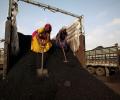
India's nine key infrastructure sectors recorded a three-month low growth of 4.8 per cent in August, primarily due to reduced production in coal, natural gas, crude oil, and fertiliser, according to government data.

RBI Governor Sanjay Malhotra reiterated India's cautious stance on cryptocurrencies due to concerns over monetary sovereignty and capital flows, while actively promoting underlying technologies like distributed ledger technology and tokenisation. He also addressed the global rise in public debt and hardening bond yields, attributing it to increased government and private spending, including that driven by AI, and noted the implications of global interest rates on India's monetary policy.

Arunachal Pradesh Chief Minister Pema Khandu lauded the state's first 10-day artificial intelligence boot camp and hackathon at IIT-Guwahati. The programme aims to build AI skills, promote innovation, and create a future-ready digital workforce, offering hands-on training in AI/ML, Python, and NLP to 40 young participants.

Adani Group Director Jeet Adani and Bharti Enterprises Vice Chairman Rakesh Bharti Mittal highlighted the importance of infrastructure, energy, and connectivity in shaping India's AI ecosystem, emphasising Visakhapatnam's potential as a major digital gateway.

On the third day of the Ranji Trophy Elite Group C matches, Delhi trailed Bengal by 88 runs, with Bengal having posted 429. Kerala faced a significant deficit against Jharkhand, while Gujarat took a first-innings lead against Odisha, who now hold a slender four-run lead in their second innings. Maharashtra led Services by 172 runs despite a shaky start to their second innings.

GIS intelligence solutions provider Mirai Aerospace Systems and Software Solutions has signed an MoU with US-based GreenValley International Inc to strengthen India's geospatial and LiDAR remote sensing manufacturing base. The collaboration focuses on local assembly, manufacturing, technical support, and the development of AI-driven LiDAR applications, aiming to meet India's growing demand across various sectors.

The National Investigation Agency (NIA) has arrested 13 individuals across Assam, West Bengal, and Kerala for their alleged involvement in a terror conspiracy orchestrated by Imam Mahmuder Kafila (IMK), an offshoot of the proscribed Jama'atul Mujahideen Bangladesh (JMB). The group aimed to radicalise youth and expand its extremist network in eastern and northeastern India through online modules, clandestine meetings, and propaganda.

A new report indicates India has become the world's fifth most digitalised economy and ranks fourth globally in AI performance, driven by increasing AI adoption and a strong digital infrastructure.

India's markets regulator Sebi has launched 'Demat 2.0', a pilot project for tokenisation of corporate bonds, enabling atomic settlement through integration with RBI's wholesale CBDC. This new market infrastructure uses Distributed Ledger Technology (DLT) to make bond issuance, trading, and settlement faster and more efficient. India is the first country to issue corporate bonds natively on a distributed ledger with central bank digital currency settlement. Additionally, RBI Governor announced new UPI innovations: 'Tap & Pay' for faster POS transactions and MyUPI, an AI-powered customer support solution.

Domestic passenger vehicle dispatches in India increased by 21.8 per cent year-on-year to 4,54,574 units in September, while two-wheeler sales rose 13.5 per cent to 24.63 lakh units, according to SIAM data.

Korean auto major Hyundai plans to invest an additional Rs 4,000 crore in Maharashtra by 2030, aiming to nearly double capacity at its new Pune manufacturing plant to 320,000 units per annum in a phased manner, a top company executive said.
Researchers from Goa Institute of Management (GIM) and Goa Business School conducted a study analysing over 1.31 lakh posts on social media platform X using machine learning models. They found that indirect aggression is most common during major social, financial, sporting, and political events in India. The study classified aggression into overt, covert, and non-aggressive forms, noting that overt aggression remained relatively low but peaked during events like India's T20 World Cup loss. The findings have significant implications for online moderation and communication policies.

The CBI has filed a charge sheet in the NEET-UG 2026 paper leak case, relying heavily on digital forensic evidence including an access control app and call data records. The investigation revealed that three NTA subject experts allegedly exploited procedural gaps to leak confidential questions for money, involving a beautician and a coaching centre owner in the distribution of the leaked material to aspirants.

Punjab & Sind Bank MD and CEO Swarup Kumar Saha clarified that merchants cannot pass on Merchant Discount Rate (MDR) charges to customers for UPI payments, ensuring consumers only pay the displayed price. The new MDR structure, effective October 15, applies a 0.4% charge on P2M transactions above Rs 2,000, with specific flat rates for certain sectors, but small-value transactions remain free.
